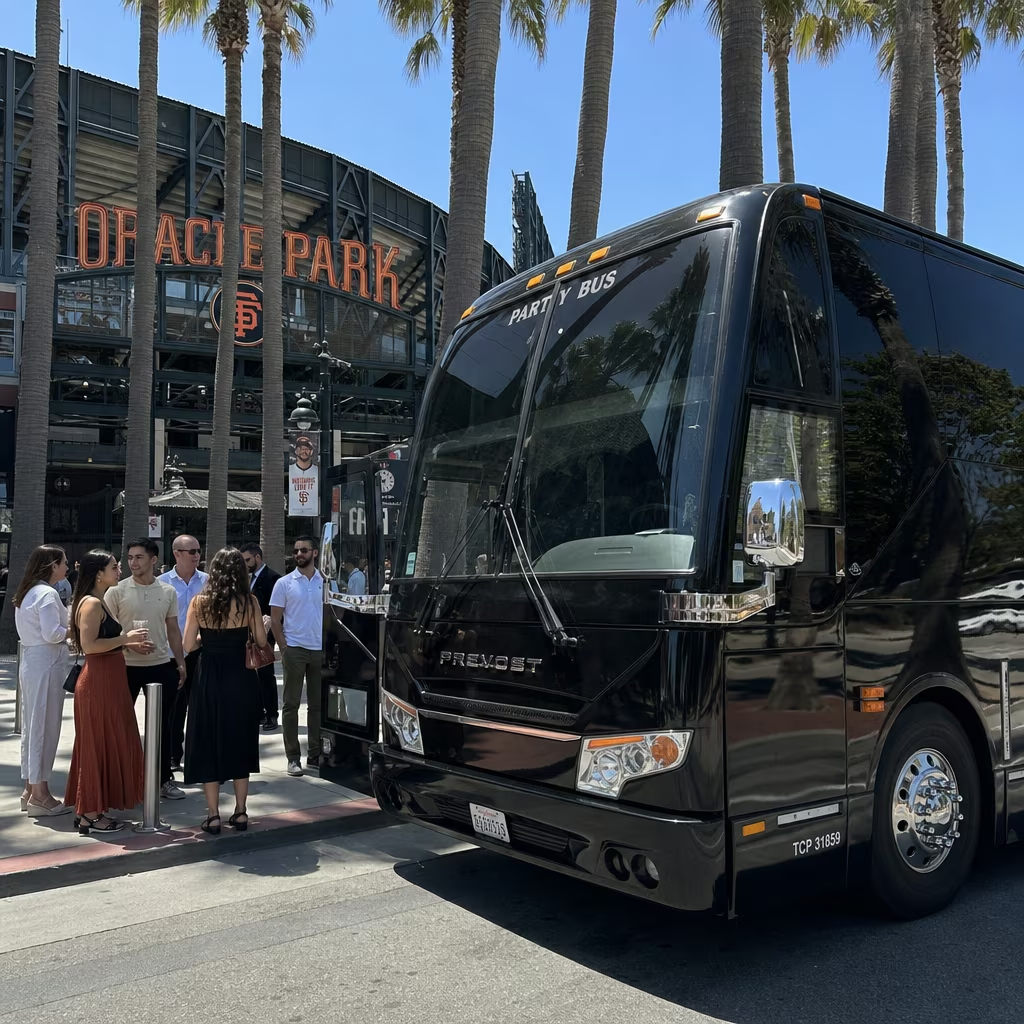
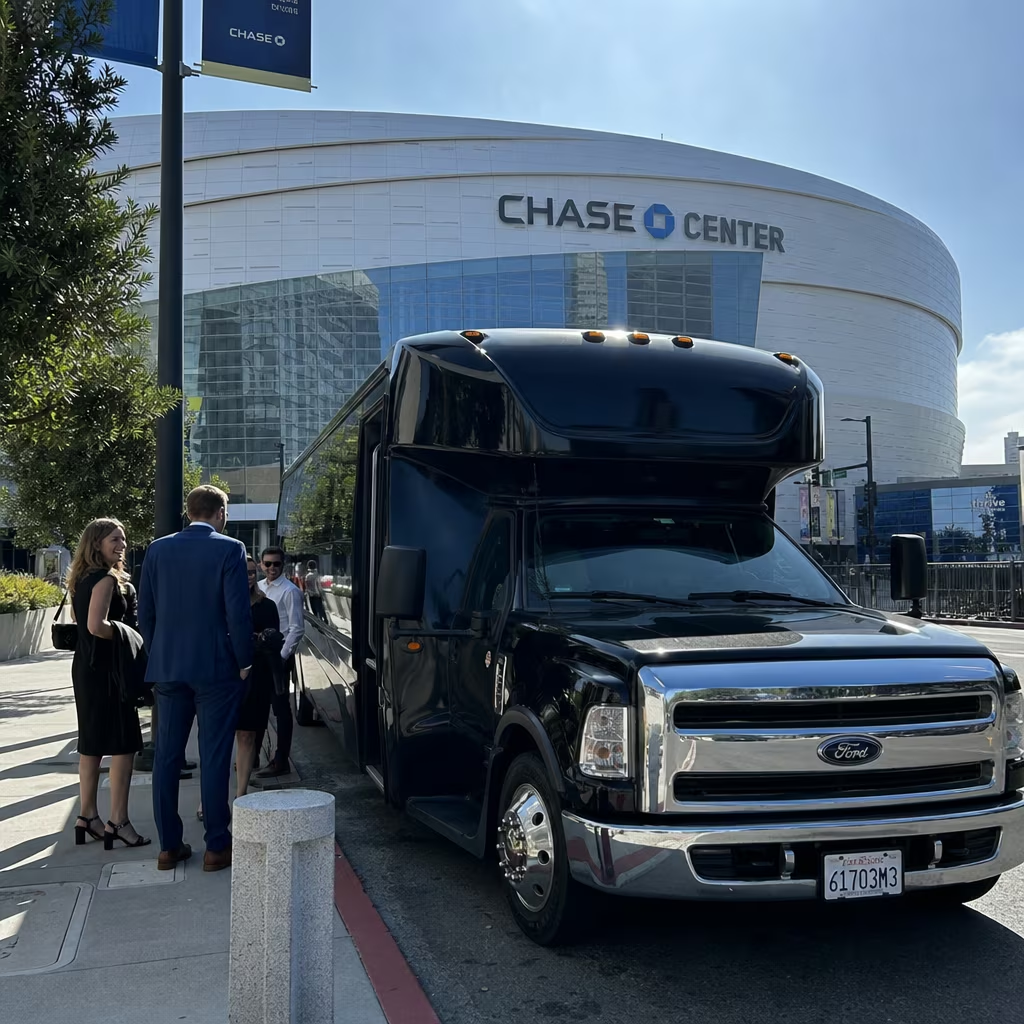
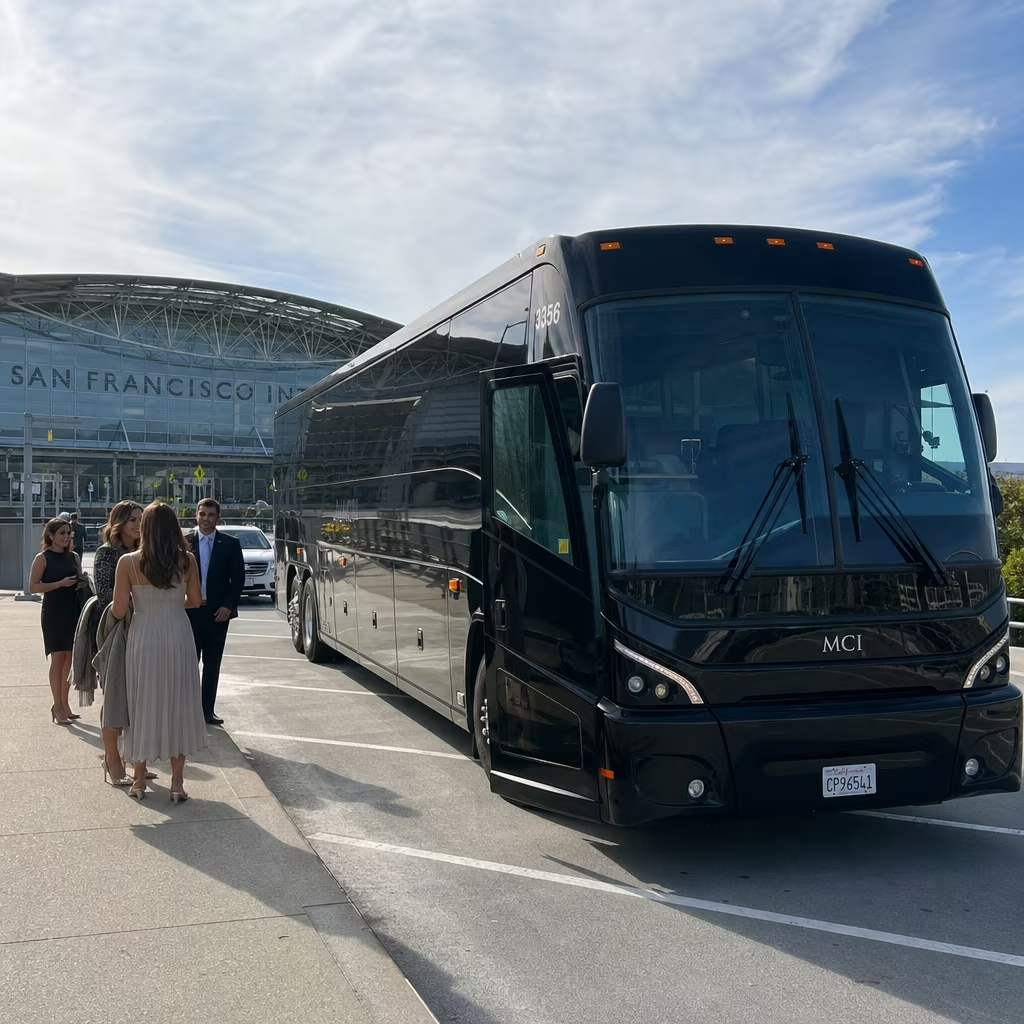
State Route 37 on a Friday afternoon — specifically the nine-mile two-lane crawl between Sears Point and Mare Island — is where a lot of Napa Valley wine trips go sideways before a single tasting gets poured. No shoulder to escape onto, no alternate route that saves meaningful time, just 40,000 daily vehicles funneled into two lanes while the Napa Valley exit sits somewhere on the other side of the backup. Rent a charter bus or party bus to Napa Valley from San Francisco, and that stretch is someone else's calculation from the minute your group boards in the city.
But SR-37 is only part of the story. What surprises first-timers most is how much the logistics inside the valley determine the shape of the trip. Napa County's Winery Definition Ordinance has governed wine country since the early 1990s, and it gives each winery a Use Permit that specifies maximum daily visitors, group size limits, and often specific restrictions on commercial tour vehicles.
Some boutique properties sit at the end of driveways a 45-foot motorcoach cannot navigate. Almost every winery worth visiting requires advance reservations for groups — and that reservation has to be in place before the bus leaves San Francisco, not arranged in someone's parking lot. Below is exactly how a group trip to Napa actually works: routes, vehicle sizing, drop-off logistics, event timing, and the one practical rule that the planning websites bury in the fine print.
The Rule That Catches Every First-Timer: Winery Reservations Before the Bus
This is the most operationally important fact in this guide, and it has nothing to do with traffic: you cannot show up at a Napa Valley winery with 20-plus people without advance reservations. Napa County's Winery Definition Ordinance — the zoning framework in place since the early 1990s — gives each property a Use Permit that sets maximum daily visitor counts, group size limits, and, in many individual permits, specific restrictions on commercial tour buses. According to the county's own permit framework, individual winery permits may include "bus restrictions" and "trip caps" — regulatory language that can limit or prohibit motorcoach visits regardless of how many seats you fill.
That's county regulation, not a guideline.
In practical terms: groups of 15 or more typically trigger the "large group" reservation category at most worthwhile wineries, and those bookings need to be confirmed before the bus leaves San Francisco. Castello di Amorosa (4045 St Helena Hwy, Calistoga, CA 94515) — one of the most popular large-group destinations in the valley — requires groups of 15 or more to contact its Hospitality and Event Team in advance, with experiences starting at $80 per person for a guided castle tour and tasting. Beringer Vineyards (2000 Main St, St. Helena, CA 94574), V. Sattui Winery (1111 White Lane, St. Helena, CA 94574), and Robert Mondavi Winery (7801 St Helena Hwy, Oakville, CA 94562) all require advance group arrangements.
The winery itinerary gets built before the vehicle gets booked. That's the right order, and skipping it is the most common planning mistake Napa groups make.
Build your winery reservation list before you book the vehicle. Napa County Use Permits set visitor caps and group rules at each property — and the vehicle you can bring depends on the winery's parking, its driveway access, and its individual permit language. Confirm the winery accepts your group size and vehicle type before the bus departs San Francisco.
Two Routes from San Francisco to Napa Valley for Charter Bus and Party Bus Groups
San Francisco connects to Napa Valley by two approaches, and the choice between them matters differently depending on your travel day, the size of your vehicle, and what's happening in the valley when you arrive.
Bay Bridge / I-80 / SR-29: The Reliable Route
Cross the Bay Bridge onto I-80 East, continue through Oakland and Berkeley, pass through Vallejo, then turn south on SR-29 into the city of Napa. The run covers roughly 74 miles and takes about 1 hour 20 minutes in light traffic — expect 1.5 to 2 hours on weekend mornings with wine country demand factored in. This is the preferred approach for full-size charter buses: I-80 is a wide, well-graded interstate that handles commercial vehicle loads without the bottlenecks that plague SR-37, and the SR-29 connection into Napa drops you directly onto the valley's main north-south corridor.
For groups leaving San Francisco before 9 a.m. on a Saturday, this route delivers the most predictable timing.
Golden Gate / US-101 / SR-37: Scenic but Unpredictable
Cross the Golden Gate Bridge north on US-101, cut east on SR-37 at Novato toward Vallejo, then connect to SR-29 into Napa. The distance is shorter on paper — roughly 50-55 miles to downtown Napa — but SR-37 is where the plan breaks down. A nine-mile stretch between Sears Point and Mare Island narrows from four lanes to two, with no alternate route and no meaningful shoulder, and backs up severely on holiday weekends, Thursday and Friday afternoons, BottleRock weekends in May, and harvest season traffic through September and October.
SR-37 also floods during winter storms — closures lasting nearly a month have happened during severe rain years. On a clear weekday morning with light traffic, the Golden Gate approach is genuinely beautiful. On a Friday afternoon during BottleRock or harvest weekend, budget an additional 60-90 minutes and consider the I-80 route instead.
Highway 29 vs. the Silverado Trail: Routing Inside the Valley
Once your bus hits the city of Napa, the itinerary splits into two north-south corridors. The right one for your group depends on which wineries are on the list.
Highway 29 runs through the valley's core towns in sequence: the city of Napa, Yountville, Oakville, Rutherford, St. Helena, and Calistoga. It's the main artery for the valley's best-known wineries — Robert Mondavi Winery in Oakville, Beringer Vineyards and V. Sattui Winery in St. Helena, and Castello di Amorosa at the north end approaching Calistoga. The trade-off: Highway 29 carries the most traffic, the highest concentration of tour buses, and a railroad crossing between Rutherford and St. Helena where all buses are required to stop.
On weekend afternoons in September and October, Highway 29 through St. Helena can back up enough that a half-mile stretch takes 20 minutes. That's not a reason to avoid it — it's a reason to plan around it.
The Silverado Trail runs 29 miles along the eastern edge of the valley, parallel to Highway 29, from downtown Napa north to Calistoga. It carries far less traffic than Highway 29, has a dedicated Class II bike lane, and leads to roughly 40 wineries including Stag's Leap Wine Cellars, Pine Ridge Vineyards, Mumm Napa, and the Stags Leap District Cabernet estates. No railroad crossing, fewer traffic signals, and significantly less congestion even on busy fall weekends.
The practical split most bus groups use: Silverado Trail in the morning while traffic is light, over to Highway 29 for a lunch stop in Yountville or St. Helena, then work south as afternoon volume builds. Cross-valley roads like Oakville Cross Road and Rutherford Cross Road connect the two corridors — they're narrow two-lane routes that a minibus navigates easily but that need to be factored into the schedule for a full-size coach.
Charter Bus and Party Bus Drop-Off in Downtown Napa and Yountville
Downtown Napa has three city parking garages and several public lots for regular vehicles, but full-size charter buses require a separate plan. The natural passenger drop-off zone is curbside near First Street and Main Street or at the Oxbow Public Market (610 & 644 First St, Napa, CA 94559) — a working food and wine marketplace along the Napa River where most day trips start with lunch or local artisan producers. After drop-off, buses typically stage at the Soscol Gateway Transit Center (625 Burnell St, Napa) — the valley's main transit hub and a practical layover point for oversized vehicles that downtown streets cannot accommodate.
Napa's municipal code restricts oversized vehicle parking on city streets, which makes a pre-arranged staging location more important than it used to be.
In Yountville — a natural lunch and tasting stop about 9 miles north of downtown Napa — the town is roughly one mile long and a few blocks wide, and on-street staging for a full-size charter bus is very limited. Drop-off near Washington Street handles restaurant reservations and tasting room visits, with the bus staging outside the town center. Confirm the staging plan before departure — Yountville's weekend pedestrian traffic is high enough that an unplanned charter bus stop on Washington Street creates real friction for the town and the trip.
A 15-35 passenger minibus handles the Yountville corridor significantly more cleanly than a 56-passenger coach.
Charter Bus Rental vs. Minibus Rental for a Napa Valley Wine Tour
Napa Valley is one of the few destinations where vehicle size matters inside the itinerary, not just for the highway run. The choice isn't just about headcount — it's about which wineries are on your list and what their driveway and parking lot can handle.
A 15-35 passenger minibus is the most versatile vehicle for a multi-winery day. Minibuses fit tighter parking areas at boutique estate wineries, navigate the narrow cross-valley connectors between Highway 29 and the Silverado Trail without being an event, and can stage in Yountville and smaller towns where a 45-foot coach would be a problem. If your winery list includes smaller appointment-only properties with gravel driveways or compact lots, the minibus is the clear call — per-day rates run $1,100 to $2,150, and the flexibility it buys inside the valley is worth it.
A 40-56 passenger charter bus makes the right call for groups of 25 or more with a winery list concentrated on Highway 29's higher-volume producers — Castello di Amorosa (which explicitly handles groups of 15+), Beringer, Robert Mondavi, and V. Sattui, all of which have the parking facilities to accommodate a coach with advance arrangement. Charter bus per-day rates run $1,350 to $2,850. The trade-off: a 56-passenger coach will sit out some stops where a minibus can pull in, and bus access at each winery needs to be confirmed before the trip.
For groups of 10-14 doing VIP tastings or a smaller private experience, a 14-passenger Sprinter limo (per-day $1,550 to $3,150) or Sprinter van (per-day $1,400 to $2,750) fits any winery driveway, and vehicles in this class commonly include premium leather seating and USB charging at every seat. Browse the full vehicle lineup to compare options side by side.
| Vehicle | Typical seats | Winery access | Best for | Per-day rate range |
|---|---|---|---|---|
| Sprinter van / Sprinter limo | Up to 14 | Excellent — fits any winery driveway | Small private groups, VIP tastings | $1,400 – $3,150 |
| 15-35 passenger minibus | 15 – 35 | Very good — accesses most wineries | Mid-size groups, multi-winery day trips | $1,100 – $2,150 |
| Party bus (15 – 50 passengers) | 15 – 50 | Good — verify with each winery in advance | Bachelorette groups, milestone birthdays, the rolling experience | $1,400 – $4,050 |
| 40-56 passenger charter bus | Up to 56 | Good at major wineries — confirm access for boutiques | Large groups, corporate wine tours, BottleRock transfers | $1,350 – $2,850 |
For bachelorette and birthday groups where the ride between wineries is part of the experience, party buses in the 20-30 passenger range add onboard LED lighting and premium sound systems to the lineup — a 30-passenger party bus runs $2,350-$3,050 per day on weekends. The San Francisco winery tour bus rental page covers the full service picture for wine country groups of every size.
BottleRock Napa Valley: Party Bus and Charter Bus Transportation
BottleRock Napa Valley fills the Napa Valley Expo (575 Third Street, Napa, CA 94559) across three days each May — the 2026 festival runs May 22-24, with 75-plus acts across five stages. It is the single biggest argument for booking a San Francisco concert bus rental to Napa rather than driving: the city of Napa publishes hard road closures across multiple blocks surrounding the venue for each festival night, including Third Street between Silverado Trail and Coombs, and Main and Brown streets between Third and Second, locked from 8 p.m. to 11 p.m. Rideshare pricing after the show has reached $200 for trips within Napa and up to $400 for rides to Calistoga, according to city transit officials.
That surge is not a bad night — it's BottleRock, every year, reliably.
The charter bus and private vehicle drop-off point for BottleRock is at Third and Randolph streets, immediately adjacent to the Napa Valley Expo grounds. The Soscol Gateway Transit Center at 625 Burnell Street sits a two-minute walk from the venue — it's the main hub for the free Vine Transit BottleRock service operating all three days including late-night runs after the festival. Free transit is useful context; a private bus that picks your group up at the agreed post-show time and returns everyone to San Francisco directly is a different thing.
One flat rate, no surge, no waiting in a rideshare queue while the festival empties out.
BottleRock 2026 dates are confirmed: May 22-24. The 2027 festival is already slated for May 28-30. Bus requests for BottleRock weekend spike when the lineup drops — sometimes months out.
If your group is planning the trip, locking in vehicle availability before the artist announcement is the practical move.
BottleRock rideshare pricing reached $200 within Napa and $400 to Calistoga after the 2025 festival, per city transit officials. A charter bus or party bus from San Francisco eliminates the post-show surge entirely — one round-trip rate for the whole group, pickup arranged in advance, and no standing in a rideshare queue after midnight.
Napa Valley Events That Fill Charter Buses from San Francisco
Beyond BottleRock, the Napa Valley calendar has several dates that drive real transportation demand and tighten bus availability from the Bay Area. Knowing these windows matters for booking timing.
Harvest Season (August through October) is peak demand, full stop. The harvest begins with sparkling wine grapes in early August and runs through late-harvest Cabernet Sauvignon in October. Visit Napa Valley's harvest season page tracks the annual calendar — the short version is that September and October weekends are the most in-demand transportation windows of the year.
Highway 29 through St. Helena backs up significantly on Saturday afternoons during peak harvest, and winery reservations fill weeks in advance. Book the bus 6-8 weeks out minimum for harvest weekend trips.
Auction Napa Valley brings wine collectors and hospitality groups to the valley in June — a multi-day event that affects hotel availability and transportation demand across the entire valley. Festival Napa Valley runs 10 days in July with concerts at wineries throughout the region. The Blue Note Jazz Festival follows in August-September.
Each of these events tightens vehicle availability from San Francisco, even for groups not attending the specific event, because overall valley demand spikes.
The Napa Valley Marathon in March runs along the Silverado Trail — the route your bus would otherwise use on a wine tour morning — and closes portions of the trail to vehicle traffic. If your group's trip coincides with the marathon, Highway 29 becomes the primary north-south corridor for the morning.
The Napa Valley Wine Train as Part of a Group Itinerary
The Napa Valley Wine Train (1275 McKinstry Street, Napa, CA 94559) is worth knowing about as a potential component of a combined itinerary. The Wine Train runs 3-6 hour lunch and dinner journeys through the valley in restored vintage rail cars, with groups of 20 or fewer booking online and groups of 21 or more contacting the events team — the train accommodates up to 300-plus guests in charter configuration, and holiday experiences run November through December. The McKinstry Street depot sits close to the Oxbow District's curbside drop zones, making it easy to combine a bus transfer from San Francisco with a Wine Train departure.
The distinction matters: the Wine Train is a fixed-route, fixed-schedule experience. A private charter bus is a flexible itinerary you control — three wineries in the order that makes geographic sense, a lunch stop when the group is hungry, and a return time your group sets rather than a departure whistle. For groups that want winery-hopping flexibility, the bus is the more versatile tool.
For groups that want a curated sit-down experience without coordination, the Wine Train is a legitimate alternative worth contacting through its events team to discuss group availability.
How Much Does a Party Bus or Charter Bus Rental to Napa Valley Cost?
A full-day Napa Valley bus rental from San Francisco — typically 8-10 hours door to door, including the highway run each way and winery time — prices based on vehicle size, the specific date, and your exact round-trip itinerary. To give you a planning range:
A 15-35 passenger minibus runs $200-$250 per hour on weekdays and $200-$275 per hour on weekends, with per-day rates landing in the range of $1,100-$2,150 — the more practical number for a full wine tour day. A 40-56 passenger charter bus runs $200-$350 per hour (weekday or weekend), with per-day rates typically between $1,350 and $2,850. For a bachelorette or birthday group wanting the party bus experience with LED lighting and premium sound, a 25-passenger party bus runs $275-$375 per hour on weekends with per-day rates from $1,850-$2,900.
Real pricing varies with the date, the specific vehicle, and your exact pickup and return locations. Those are planning ranges to give you an idea — actual pricing for your Napa Valley group comes from the quote tool. Once the cost splits across 20, 30, or 40 people, the per-head number routinely comes out ahead of individual rideshares — especially on a harvest or BottleRock weekend when surge pricing has historically hit $200 per car just within Napa.
One bus, one rate, no post-show surprises. See the San Francisco party bus prices page for the full vehicle-by-vehicle breakdown, or call 415-796-8302 for a quote on your specific date.
Tips for Planning a Napa Valley Group Trip by Bus
Book winery reservations before you book the vehicle. Your vehicle choice follows from your winery list. Once you know which properties you're visiting and what their driveway and parking capacity looks like, the right vehicle size is obvious.
Share your winery list when you request your bus quote — groups with a mix of boutique estates and high-volume Highway 29 producers often end up with a minibus rather than a charter bus for exactly this reason.
Three wineries is a realistic full day; four is the ceiling. Most worthwhile tasting experiences run 90 minutes to 2 hours. Factor transit time between Highway 29 and Silverado Trail stops — the cross-valley connectors are narrow two-lane roads, and the railroad crossing on Highway 29 between Rutherford and St. Helena adds time for buses.
Leave San Francisco by 9 a.m. on weekends. Departing before 9 a.m. on a Saturday puts your group in Napa before Highway 29 and SR-37 hit weekend volume. Friday morning before 8 a.m. is cleaner still.
Friday afternoon departures — especially during harvest season or BottleRock weekend — add 45-90 minutes to either approach.
Check the Visit Napa Valley event calendar before locking your date. BottleRock in May, Auction Napa Valley in June, Festival Napa Valley in July, and the Blue Note Jazz Festival in August-September all affect downtown Napa traffic and parking. BottleRock specifically publishes hard road closure maps that affect where a bus can stage around the Expo grounds.
ADA-accessible vehicles are available through the network — note that requirement when you request your quote so the right vehicle gets matched to your group size and needs.
Frequently Asked Questions About Napa Valley Bus Rentals
Do wineries in Napa Valley accept walk-in groups from a charter bus?
Almost none of the worthwhile ones, and some can't legally accommodate commercial tour vehicles without advance coordination. Napa County's Winery Definition Ordinance gives each winery a Use Permit that sets visitor caps, group minimums, and in many cases specific restrictions on commercial buses. Groups of 15 or more typically trigger the large-group reservation requirement.
Book tasting appointments before you book the bus — that's the right sequence.
What's the best vehicle for a Napa Valley wine tour from San Francisco?
For groups of 12-20 doing a mix of Highway 29 and Silverado Trail wineries, a 15-35 passenger minibus is the most flexible choice — it can access boutique winery driveways and stage in smaller towns without the coordination issues a 45-foot charter bus creates. For groups of 25 or more with a winery list centered on higher-volume Highway 29 producers like Castello di Amorosa, Beringer, and Robert Mondavi, a full-size charter bus works well with advance arrangement. Share your winery list when you request a quote — the right vehicle follows from that, not just headcount.
How long is the drive from San Francisco to Napa Valley?
Plan on 1.5 to 2 hours one-way under typical weekend conditions. The Bay Bridge / I-80 / SR-29 route covers about 74 miles and runs roughly 1 hour 20 minutes in light traffic. The Golden Gate / US-101 / SR-37 route is shorter in miles but SR-37's nine-mile two-lane bottleneck near Sears Point can add 45-90 minutes on busy weekends.
For a full-day wine tour, a 9 a.m. departure from San Francisco puts your group at the first winery by 10:30 a.m. and back in San Francisco by 7-8 p.m. — an 8-10 hour charter day total.
Where does a charter bus or party bus drop off at BottleRock Napa Valley?
The designated drop-off and private vehicle access point for BottleRock is at Third and Randolph streets, steps from the Napa Valley Expo entrance at 575 Third Street. The festival publishes hard road closures across the surrounding blocks each festival night — Third Street between Silverado Trail and Coombs goes fully closed 8 p.m. to 11 p.m. — so staging your bus and pickup window should be confirmed when you book. Rideshare post-show pricing has reached $200 within Napa; arranging the bus pickup in advance eliminates that entirely.
Can a 56-passenger charter bus visit any winery in Napa Valley?
No. Some boutique wineries have narrow access roads or compact parking areas that a 45-foot motorcoach cannot enter, and some individual Use Permits include language that limits or prohibits commercial bus visits regardless of size. The major Highway 29 producers — Castello di Amorosa, Robert Mondavi Winery, Beringer Vineyards, and V. Sattui Winery — have the parking to handle a full-size coach with advance group reservations. Smaller Silverado Trail estates frequently do not, and a minibus is the right vehicle for those stops.
Verify access with each winery before the bus leaves.
How far in advance should I book a bus to Napa Valley?
For harvest season weekends in September and October, book 6-8 weeks out minimum — Bay Area vehicle availability tightens as harvest demand builds. For BottleRock (May 22-24, 2026 and May 28-30, 2027), lock in your vehicle as soon as the group is confirmed — requests spike when the lineup is announced, often months before the festival. For off-peak weekday wine tours in winter or early spring, 2-3 weeks of lead time is usually workable.
The earlier you call, the more vehicle options and pricing flexibility you'll have.
Is the Golden Gate Bridge route faster, or is the Bay Bridge route better for buses?
The Bay Bridge / I-80 route is almost always the better choice for buses. It's roughly 74 miles — longer in distance than the Golden Gate / SR-37 route — but SR-37's nine-mile two-lane bottleneck near Sears Point backs up severely on weekends, during BottleRock, and through harvest season, making the total time unpredictable. The I-80 route is also better suited to commercial vehicle weights and dimensions.
The Golden Gate route makes sense on clear weekday mornings with light traffic; on any weekend or event date, I-80 is the more reliable call.
Does the Napa Valley Wine Train work for large groups?
The Napa Valley Wine Train handles groups of 20 or fewer through its online booking system, and groups of 21 or more through its events team — in charter configuration it can accommodate up to 300-plus guests. It's a fixed-route, fixed-schedule experience running 3-6 hours from 1275 McKinstry Street in Napa. For groups that want a curated wine-and-dining experience without coordinating a winery itinerary, it's a real option.
For groups that want to visit specific wineries on their own schedule, a private bus is more flexible.
What events in Napa Valley should I plan around?
BottleRock Napa Valley (May 22-24, 2026) fills the city and spikes transportation demand from San Francisco. Harvest Season (August through October) is the busiest transportation window of the year, with September and October weekends the most in-demand. Auction Napa Valley (June) and Festival Napa Valley (July) tighten valley-wide accommodation and transportation.
The Napa Valley Marathon (March) runs along the Silverado Trail and closes portions to vehicle traffic in the morning. Any of these dates requires earlier booking and a modified approach inside the valley.
Book Your Napa Valley Party Bus or Charter Bus Rental from San Francisco
The right vehicle for your Napa Valley group is one quick form or one call away. Partybus-san-francisco.com connects you to pricing and vehicle options from a large network of bus companies serving San Francisco and the Bay Area — compare party buses, charter buses, minibuses, Sprinter vans, and Sprinter limos side by side, for any date and any group size, without needing an account and without calling a dozen companies. Share your date, your headcount, your approximate winery itinerary, and your pickup location in San Francisco, and get pricing in under 30 seconds.
For Napa Valley trips specifically, include your planned departure time and approximate return time in your request — an 8-10 hour wine tour day prices differently than a point-to-point BottleRock transfer. The more detail up front, the more accurate the quote. Call 415-796-8302 any time or use the online quote tool to get started.
Also planning a trip to Outside Lands or another Bay Area festival? The Outside Lands transportation guide covers that venue's drop-off logistics in the same detail.